Speakers
Prof. Anu Realo
Professor of Personality and Social Psychology, University of Tartu (Estonia) & Associate Professor and Director of Graduate Studies (Research), University of Warwick (United Kingdom).
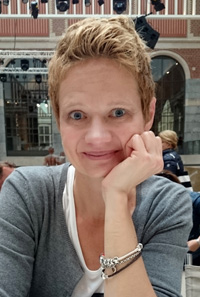
Anu Realo received her doctoral degree in psychology with highest honours (summa cum laude) from the University of Tartu in 1999 after which she worked as a post-doctoral research fellow at the KU Leuven, Belgium. She worked as an associate professor & senior research fellow at the University of Tartu for 10 years. With a background in personality & cross-cultural psychology, she has conducted considerable research on the nature of personality traits, the definition and conceptualisation of subjective wellbeing, and on the nature of cultural characteristics, such as individualism-collectivism, social capital, & tightness-looseness. The focus of her recent academic work involves examining the genetics of personality traits, and the complex relationships among personality, health & subjective wellbeing. She has published approximately 140 papers or book chapters, mostly in high quality peer-reviewed international journals and is among the world’s top 1% most highly cited researchers in psychology.
Prof. Boris Mlačić
Institute of Social Sciences Ivo Pilar | Center for Individual Differences Research in Zagreb (Croatia)

Boris Mlačić is a research advisor at the Institute of Social Sciences Ivo Pilar in Zagreb and Full Professor at the Department of Psychology, College of Croatian Studies, University of Zagreb and the Department of Psychology, Catholic University of Croatia. He was awarded a Fulbright Research Award (2009/2010) at the Oregon Research Institute and was a recipient of the Croatian Annual National Award for Science for 1999. Since 2013 he is a member of the Executive Committee of World Personality Association. In his research he focuses on individual differences, the lexical approach in personality psychology, the Big-Five model, and personality development. In particular, he develops personality-descriptive taxonomies, studies self-peer agreement in the context of personality and social attitudes and personality development.
Prof. Jesse Bering
Associate Professor of Science Communication at the University of Otago (New Zealand).
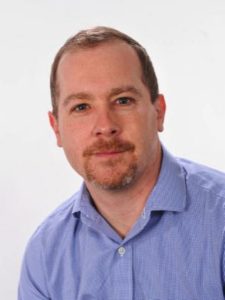
Jesse Bering is an award-winning science writer specialising in evolutionary psychology and human behaviour. His “Bering in Mind” column at Scientific American was a 2010 Webby Award Honoree for the Blog-Cultural category by The International Academy of Digital Arts and Sciences. Bering is also the author of award winning books – ‘The Belief Instinct (2011)’, ‘Why Is the Penis Shaped Like That? (2012)’ and Perv (2013). An experimental psychologist by training, Bering’s early research was in the cognitive science of religion, and he has published extensively in that field. He began his career at the University of Arkansas as an Assistant Professor of Psychology (2002-2006). He then served as the Director of the Institute of Cognition and Culture at the Queen’s University, Belfast, Northern Ireland, where he was a Reader in the School of History and Anthropology (2006-2011). Presently, he is an Associate Professor at the Centre for Science Communication at the University of Otago, New Zealand.
Mr. Jovanny Varela Ferreyra
Artist and creator of The Artidote.
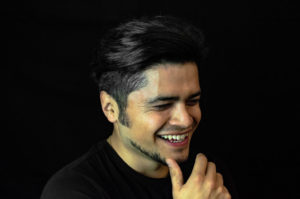
Born in Mexico, Jovanny Varela Ferreyra (Jova) emigrated to the U.S. at the age of ten. Lacking English proficiency, he started expressing himself through drawing, a second language and passion that would lead him to study art at University. During the rise of social media as a communications tool, Jova began curating artwork online in novel ways that would ultimately go viral and generate an online community of 1million+ users and, more importantly, form unlikely bonds among individuals across geographies, cultures & creeds. The Artidote community has become a global support group most recently responsible for saving suicidal lives on Snapchat. As it continues to grow, it has expanded beyond the virtual and entered real spaces through Artidote Meetups hosted by Jova in cities across the globe. At the 32nd EFPSA Congress he will be talking about empathy and personality & mental health.
Dr. Natalia Banasik-Jemielniak
Ph.D. researcher at the University of Warsaw (Poland).
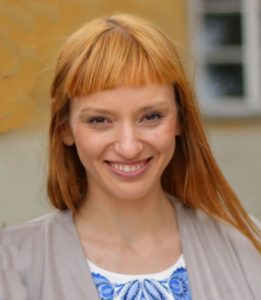
Natalia Banasik-Jemielniak is a researcher at the University of Warsaw, Poland. Her main topics of interest concern communication studies and psycholinguistics, with special focus on social and language development, intercultural education, bilingualism, humor and the understanding and use of ironic utterances. She worked at Harvard Graduate School of Education as pre-doctoral research fellow in 2015-2017, was a principal investigator in several research projects and completed several
international research stays, e.g. at Harvard University, University of Reading and University of Delaware. She obtained three masters’ degrees: in linguistics (University of Warsaw, 2009), Intercultural Education (Freie Universitaet Berlin, 2012) and Psychology (2012). She defended her Ph.D. in 2017 with a dissertation on social reasoning in children. She is now a supervisor in EFPSA’s Junior Researcher Programme Project, “Development of Ironic Humor Across Cultures”;. Her first EFPSA Event was during her undergraduate years – she was a participant in a Congress in 2009 held in Germany and came back to participate many times more. During the 32nd EFPSA Congress she will be delivering a presentation entitled “Why are (some) people ironic?”.
Dr. Gordon Sammut
Senior Lecturer of Social Psychology at the University of Malta and visiting fellow at the Department of Psychological and Behavioural Science at the London School of Economics & Political Science (United Kingdom).
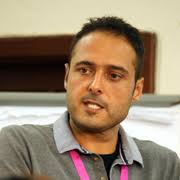
Graduating from his Doctoral studies in Social Psychology at the LSE in 2011, at the University of Malta, Dr. Gordon Sammut coordinates a masters by research programme in psychological studies and supervises a number of doctoral studies. He has participated in MIRIPS, an international study that investigated multiculturalism, integration & intercultural contact in 17 countries. He is a member of the Horizon 2020 funded Re.Cri.Re project that seeks to investigate cultural dynamics in policymaking in Europe across various domains & countries. His present interests concern intercultural & intergroup relations, the theory of social representations, modalities of social influence, and issues relating to divergent perspectives in social relations that may precipitate a spiral of conflict between diverse groups. He is co-editor of various journals including, The Cambridge Handbook of Social Representations [2015, Cambridge University Press] and Understanding the Self and Others: Explorations in Intersubjectivity and Interobjectivity [2013, Routledge]. Gordon is also associate editor of Peace and Conflict: Journal of Peace Psychology.
Prof. Mary Anne Lauri
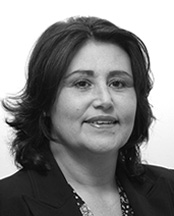
Mary Anne Lauri graduated from the University of Malta after reading for a first degree in psychology and proceeded to read an M.Sc. in Social Psychology at the London School of Economics (LSE). She obtained a Ph.D from the University of London. She joined the University of Malta as an Assistant Lecturer in 1992. She was promoted to Lecturer, Senior LEcturer and later, to Associate Professor. Since 2006 she has been carrying out the duties of Pro-Rector responsible for Students & Institutional Affairs. Her research interest is the study of theoretical and empirical applications of social psychology to everyday societal issues such as religion, health and the media. She has been appointed to serve on several national committees and boards such as the Maltese Psychologists Profession Board and she was also the President of the Maltese Psychological Association between 2004 and 2008. During the 32nd EFPSA Congress she will be talking about prosocial behaviour and psychological wellbeing.
Dr. Greta Darmanin Kissaun
Deputy Dean & Head of Department of Psychology at the University of Malta
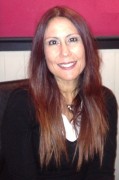
Dr Greta Darmanin Kissaun is a Clinical psychologist and Psychotherapist who has worked extensively with severe mental illness. Before joining the Department of Psychology she was employed as a Senior Clinical Psychologist at Mount Carmel Hospital, Malta. She also worked in private practice for several years. She read for her undergraduate degree in Psychology at the University of Malta and then pursued a professional degree in Clinical Psychology at the University of Padua, Italy. She obtained her PhD in Psychotherapy and Counselling from Regent’s University, London. She is a resident academic at the Psychology Department, University of Malta where she has been co-ordinator of the professional Master’s Programme in Clinical Psychology since 2005. Her teaching and research revolve mainly around Psychopatholog, Psychology of Personality and Psychotherapy and she has supervised several undergraduate and post-graduate dissertations in these areas. She has published some of her papers in peer-reviewed journals and edited books. She is currently Head of the Department of Psychology and Deputy Dean of the Faculty for Social Wellbeing at the University of Malta.
Dr. Gottfried Catania
Assistant Lecturer at the University of Malta & Lecturer
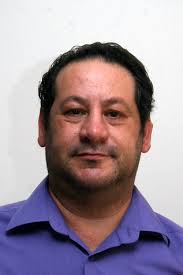
Gottfried Catania is an organisational psychologist and resident academic at the University of Malta. He is the Deputy Head of the Psychology Department, and has previously co-ordinated the Bachelor in Psychology course for 5 years. He has also designed, delivered and evaluated training programmes in various organisations, and is involved in consultancy in workplace settings. He has recently submitted his PhD, which has used a mixed methods methodology to examine how financial advisors perceive ethical and unethical behaviour in their profession. His research interests include workplace motivation, ethical behaviour at work, the impact of technology on quality of life, and the impact of social media on face to face relationships. Gottfried has published his work in academic journals and edited books, and presented his research at various local and international conferences. He has been selected to participate in the 5th EAWOP Early Researcher Summer School in Birmingham as one of the 30 most promising late stage PhD students in organisational psychology in Europe, and his paper “The repertory grid technique as a method for eliciting tacit knowledge” was awarded best PhD paper at the 14th European Conference for Research Methodology for Business and Management Studies in 2015.
Willingness Team

Willingness was set up in 2011 with the intention of offering services that are truly client-centred. Since then Willingness has managed to create more than 10 services, produce TV and Radio programmes, write sex education booklets, and get more than 15 professionals together to work in a truly multidisciplinary approach. At Willingness, we work very hard to help people reach their goals through counselling, psychology, psychotherapy, psychiatry, physiotherapy and parent coaching amongst others. We are set to change the world, one person at a time. We also want to have fun doing it.
Matthew Bartolo
Counsellor specialising in Sex & Relationships at Willingness Malta.
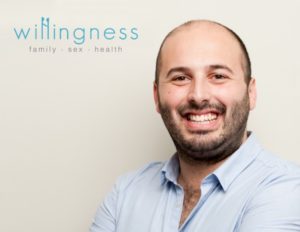
Matthew Bartolo is the founder of Willingness Malta, a multi-disciplinary team working together to offer professional services related to family; sex; and health. His background is in psychology, counselling and teaching. He is also a qualified Sex & Relationship therapist. Matthew has presented in international and national conferences. He gives talks about motivation; parenting; sex and sexuality, and more. He has taught and delivered talks to diverse professional organisations about the importance and way of dealing with sex and sexuality with clients/patients. He takes sex education very seriously and has written booklets for both parents and children; produced radio and TV programs discussing sex and sexuality. He is a visiting lecturer on diverse Master level courses in Malta and Lithuania. His professional, yet informal way of approaching and discussing the subject makes it easy for listeners/viewers/professionals and parents to discuss the topic.
Steve Libreri
Parent Coach and Lead Social Worker at Willingness Malta

Steve Libreri is a graduated social worker, HR professional and a licensed Personal trainer who has been involved in many different human experiences and work settings. Throughout his path towards development he has led himself to rethink his style of work with people as he always felt that he was part of a system which provided a fragmented focus. In his attempt to provide a meaningful service, Steve now adopts a renewed holistic perspective which gives equal importance to the various experiences of the human being. Today, as a life coach, he works with clients in a manner to pursue balance in the physical, intellectual, emotional and spiritual dimension of the human experience. This style of service is applicable to a variety of people who present different life problems as each program is tailored to the unique needs and history of the individual.
Claire Borg
Psychotherapist at Willingness Malta.

Claire Borg works with adolescents and adults who are experiencing difficulties such as depression, anxiety and other mental health complications because of issues related to self-esteem, bereavement, relationships, and burnout, among other issues. Claire graduated with an Honours degree in Psychology from the University of Malta. She then continued to further her studies by obtaining a Post-graduate diploma in Gestalt Psychotherapy and eventually proceeded to attain a Master’s degree in Gestalt Psychotherapy. During this time, Claire also published a research paper about stress, health and coping together with the Head of the Psychology Department at the University of Malta. This monograph was the second one in the Resilience and Health series published by the Centre for Resilience and Socio-Emotional Health. Claire’s background includes working in palliative care, mental health and domestic violence settings. She also used to teach Psychology to Sixth Form students in preparation for their Matsec examinations.